Visible dark mold usually means it is time to check both the material and the moisture source carefully.
People often land here when they are looking at dark mold on drywall, trim, attic boards, crawl space framing, or bathroom surfaces and trying to understand whether they are dealing with light cleanup or a broader remediation problem.
- Built for visible dark growth in attics, crawl spaces, bathrooms, and lower walls
- Useful when musty odors and staining keep returning after cleaning
- Helps bridge the gap between urgent concern and a clearer cleanup plan
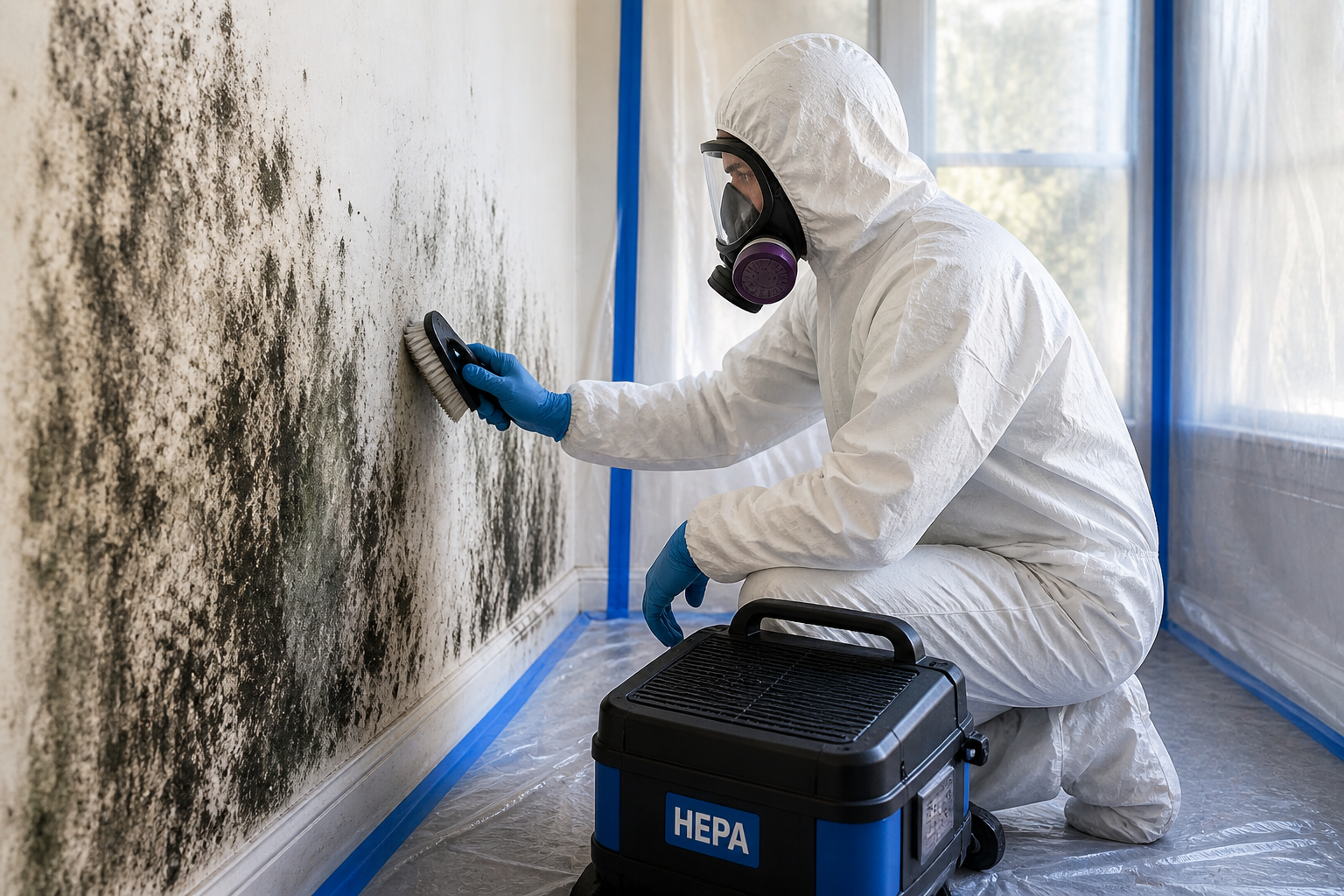
What black mold questions usually need to be answered.
Dark staining on drywall
Visible black or gray staining on drywall often brings up concerns about hidden moisture and the depth of the damage.
Bathrooms and ceilings
Steam, poor ventilation, and slow leaks often create repeat growth around paint, texture, and trim.
Attics and framing
Dark growth on attic sheathing, rafters, and framing usually ties back to roof leaks or trapped humidity.
Crawl space materials
Subfloors and joists can develop dark mold where moisture stays high for long periods.
- EPA recommends drying water-damaged materials within 24 to 48 hours to help prevent mold growth.
- EPA says indoor humidity should stay below 60%, with 30% to 50% being the better range.
- EPA notes people spend about 90% of their time indoors, so active mold on interior materials becomes hard to ignore quickly.
What the next step usually looks like.
Look at the visible growth
Where it shows up and how much surface is involved both matter.
Trace the water or humidity source
The moisture story often explains whether the issue is old, active, or likely to come back.
Set the right cleanup scope
Some dark mold concerns stay targeted while others point to broader remediation and material removal.
Need to talk through this mold problem by phone?
Call with the room, the moisture source, and what the materials look like now.