Mold remediation, mold removal, and mold inspection for Chesapeake properties dealing with moisture damage.
If you are dealing with attic mold after a roof leak, crawl space mold under the house, black staining on drywall, or a musty smell that keeps coming back, you can move straight to the service or guide that matches the problem.
Choose the page that best matches the mold problem, room, or cleanup question.
Mold problems are not all the same. Some people need a full remediation overview, some are comparing mold clean up services or a mold removal service, and others want room-specific guidance for attics, crawl spaces, or a mold inspection service.
Mold remediation Chesapeake, VA
Professional mold remediation service, containment, air filtration, damaged material decisions, and moisture correction.
Cleanup focusMold removal Chesapeake, VA
Mold clean up services and mold removal service guidance for drywall, trim, ceilings, and framing.
AssessmentMold inspection Chesapeake, VA
Mold inspection service guidance, what to check, and when mold air quality testing may be part of the next step.
Crawl spacesCrawl space mold removal Chesapeake, VA
For humid crawl spaces, musty subfloors, wet insulation, and joists with visible growth.
AtticsAttic mold removal Chesapeake, VA
For roof leaks, attic sheathing stains, humid ridge lines, and wet insulation questions.
CommercialCommercial mold remediation Chesapeake, VA
For offices, retail spaces, tenant properties, and buildings where downtime matters.
Chesapeake moisture problems usually return unless the water source or humidity pattern changes.
Crawl space dampness, roof leaks, bathroom ventilation issues, HVAC condensation, plumbing leaks, and storm-driven moisture are some of the most common reasons mold shows up on drywall, framing, insulation, and trim.
- Roof leaks and attic humidity along sheathing and rafters
- Ground moisture and poor airflow in crawl spaces
- Repeated condensation in bathrooms, utility rooms, and around windows
- Pipe leaks behind walls or in cabinetry that stay hidden too long
- Wet drywall, wet insulation, and musty materials after water damage
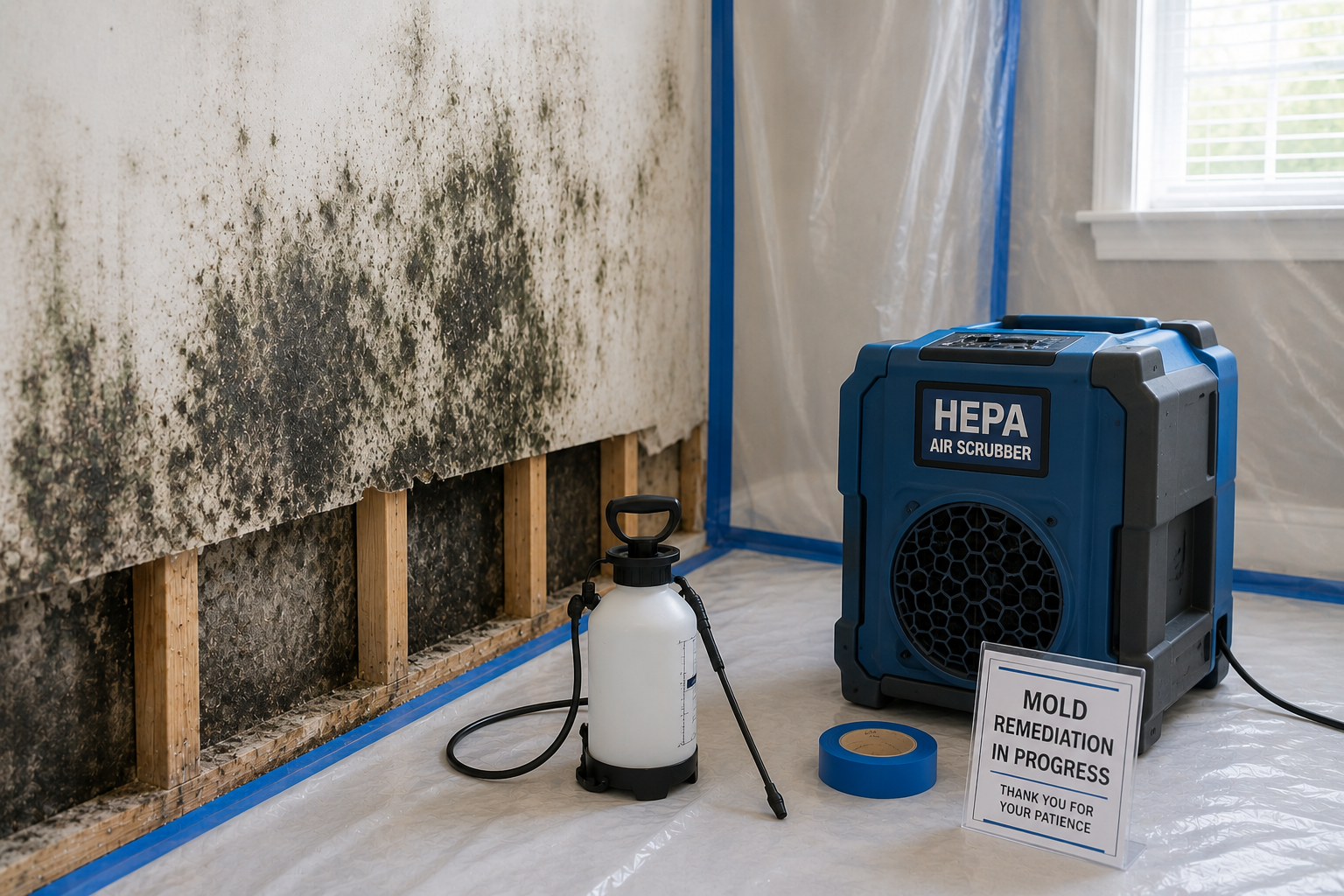
Local Chesapeake pages for the neighborhoods homeowners ask about most often.
Use the local area pages for neighborhood-specific mold remediation and mold removal guidance.
Great Bridge mold remediation
Guidance for crawl spaces, attics, bathrooms, and leak-related mold problems in Great Bridge homes.
GreenbrierGreenbrier mold remediation
For condos, townhomes, and single-family properties with moisture issues and visible growth.
Deep CreekDeep Creek mold remediation
Focused on humidity, storm moisture, and wet building materials after leaks or drainage problems.
Western BranchWestern Branch mold remediation
For recurring odors, dark staining, and mold cleanup concerns in Western Branch properties.
South NorfolkSouth Norfolk mold remediation
For older housing stock, hidden leaks, damp lower walls, and crawl space moisture issues.
See all areasChesapeake service areas
Browse the full set of Chesapeake neighborhood pages and jump to the one closest to your location.
Examples of the kinds of mold damage and containment work homeowners often ask about.
Visible wall growth, damaged materials, and contained work zones often look more serious once the area is opened up and reviewed more closely. These examples reflect the kinds of conditions people call about after leaks, humidity problems, and recurring musty odors.
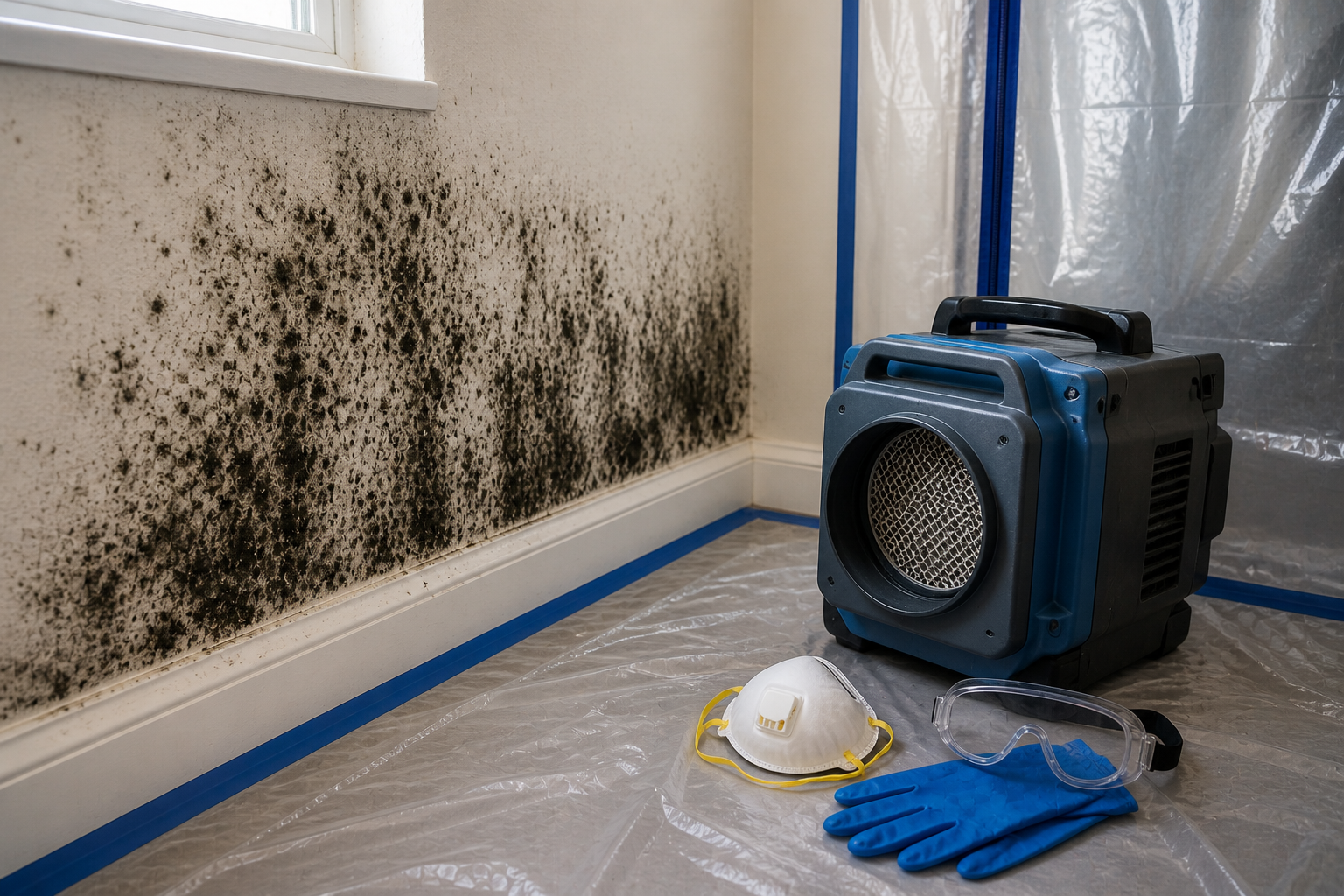
Contained room with visible wall damage
Useful for mold remediation, black mold cleanup, and post-water-damage questions.
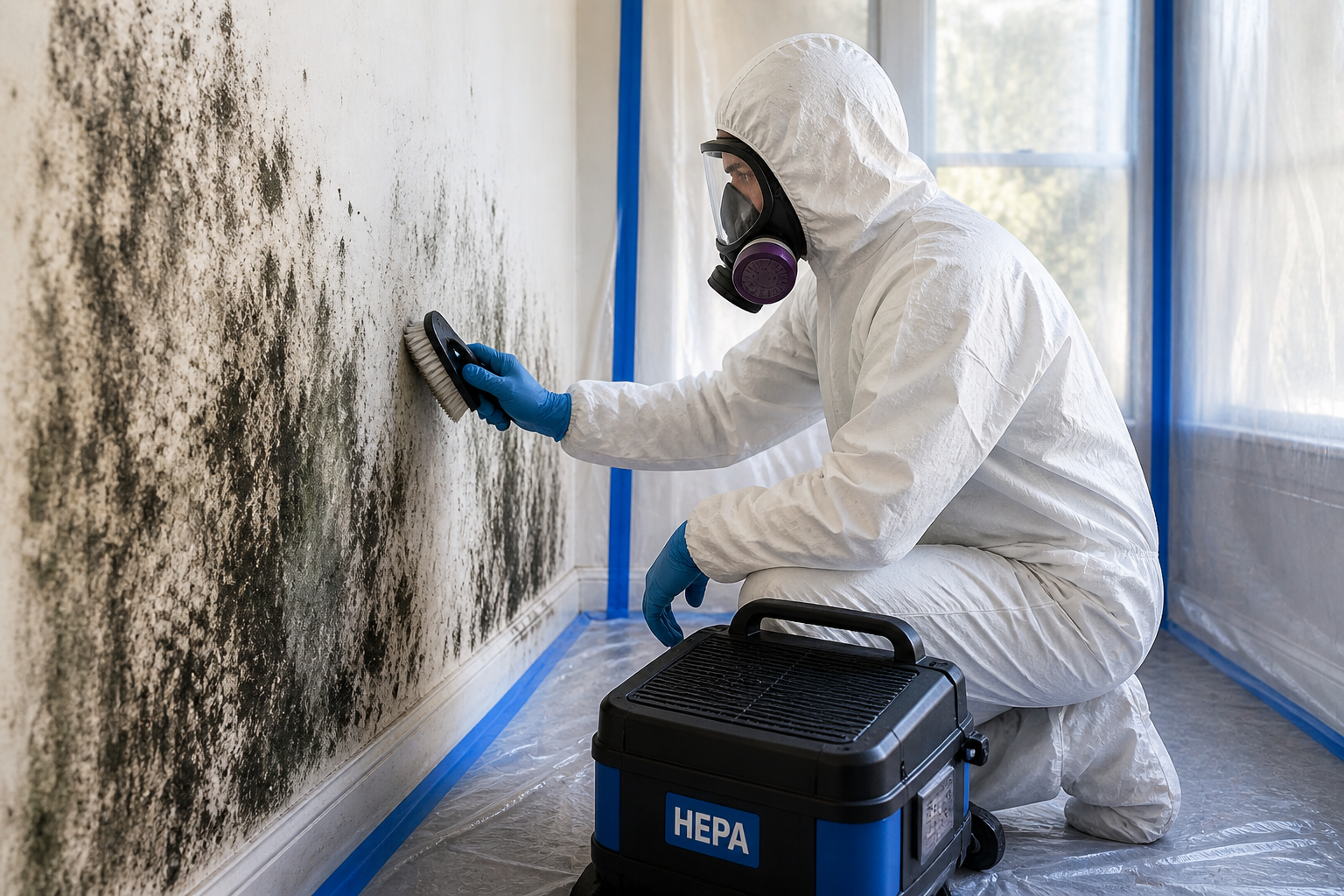
Cleanup work during active remediation
Shows the kind of controlled work zone people expect when the issue is larger than a light surface wipe-down.
Answer the longer questions people ask before they call about mold remediation.
These guides cover the homeowner questions that usually come up before people understand the difference between cleanup, remediation, hidden damage, and moisture conditions.
Mold remediation vs mold removal
Understand the difference between cleanup-only language and a full remediation scope.
Signs of mold behind walls
What stains, soft drywall, odors, and leak history can suggest when the damage is not fully visible.
How fast mold grows after water damage
Why drying time matters after roof leaks, flooding, plumbing failures, and soaked materials.
Attic mold after a roof leak
Why attic sheathing, rafters, and insulation can develop mold after repeated moisture entry.
Crawl space mold in Chesapeake
Why humid subfloors and damp framing are so common in crawl spaces around the region.
See all mold guides
Open the article hub for the full set of mold questions covered here.
Questions people ask before scheduling mold remediation or mold inspection in Chesapeake.
What is the difference between mold remediation and mold removal?
Mold removal usually refers to the cleanup step, while mold remediation includes containment, filtration, material decisions, and the moisture source that allowed mold to grow.
Are mold abatement, mold mitigation, and mold remediation the same thing?
Homeowners often use mold abatement, mold mitigation, and mold remediation interchangeably. In practice, they usually point to the same larger goal: control the affected area, remove contaminated material where needed, and address the moisture source so the problem does not return. That is also why people comparing mold abatement companies or mold mitigation companies often end up looking for the same broader service outcome.
When should I call for mold inspection in Chesapeake?
Inspection is helpful when you have a musty odor, visible mold, recent water damage, soft drywall, stained attic boards, or a crawl space that stays damp. It is also common for people to start here when they are looking for a mold removal specialist, mold remediation experts, or a mold testing professional and want a clearer first step.
Where is mold most common in Chesapeake homes?
Attics, crawl spaces, bathrooms, laundry rooms, utility areas, and rooms affected by roof leaks or plumbing leaks are some of the most common trouble spots.
Can black mold on drywall mean there is more damage behind the wall?
It can. Visible dark staining sometimes points to a larger moisture problem inside the cavity, especially when the drywall feels soft or the smell keeps returning.
What causes crawl space mold in Chesapeake?
Ground moisture, high humidity, drainage issues, poor encapsulation, and air movement problems under the home are common causes.
Can attic mold come back after cleaning?
Yes. If roof leaks, ventilation problems, or trapped humidity are still present, the mold conditions can return even after cleanup.
Can you remove mold from drywall or sheetrock?
Sometimes the answer is limited mold treatment for drywall, and sometimes the safer path is mold in drywall removal because the paper facing or the core stayed wet too long. That decision usually depends on how deep the damage goes and whether the sheetrock is still sound.
When do people ask about the cost of mold inspection or bathroom mold removal cost?
Those questions usually come up once someone has visible mold in a bathroom ceiling, around a shower wall, or after a leak. The cost of mold inspection and the likely bathroom mold removal cost depend on the room size, the material involved, and whether the moisture source is still active.
Need help with mold remediation, mold removal, or mold inspection in Chesapeake?
Call now to talk through the room, the moisture source, and whether you are dealing with attic mold, crawl space mold, drywall damage, or a recurring odor.