How fast does mold grow after water damage?
Mold can begin becoming a concern surprisingly quickly when drywall, insulation, trim, or framing stay damp after a leak, flood, roof issue, or plumbing failure.
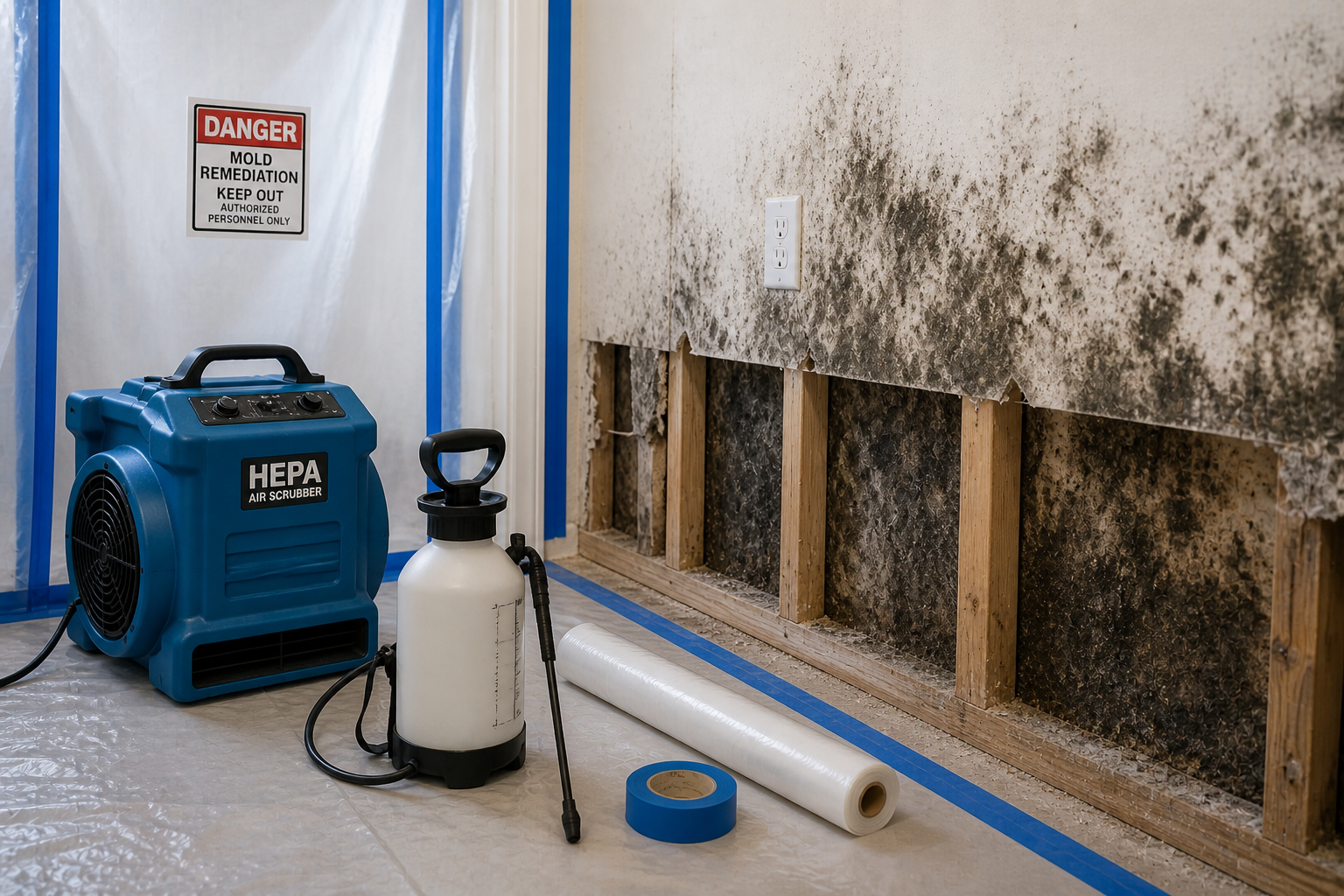
Drying time matters more than people expect
Once materials stay wet for too long, the conversation changes from simple drying to odor, staining, and possible mold growth.
That is why water damage and mold remediation are so closely connected in attics, crawl spaces, lower walls, and rooms with hidden plumbing leaks.
Porous materials stay at risk longer
Drywall paper, insulation, carpeting, and wood-based materials can all hold moisture differently, which affects how quickly mold conditions develop.
Even when a surface feels less wet, nearby enclosed materials can still be holding enough moisture to create an odor or visible staining later.
Why this matters in Chesapeake
Humidity can slow the drying process, especially in crawl spaces, attics, bathrooms, and closed utility rooms.
That makes it important to pay attention not just to the water event itself but to whether the area fully dried before normal temperatures and humidity returned.